
No
Does Brill pay authors upfront for standard book publishing?
No — Brill doesn’t pay authors upfront for standard book publishing
You won’t get an advance from Brill in their standard contracts. They only pay royalties after covering production costs through sales, and only if the book actually makes money.
What publishing models does Brill use?
Brill uses two very different models: traditional cost-recovery vs. fee-based Open Access
Founded way back in 1683, Brill mostly serves libraries and scholars with small print runs and high per-copy prices. That model funds their operations instead of paying authors upfront. Open Access flips the script: authors or their institutions pay fees so readers get the content for free Brill.
How does Brill’s traditional publishing differ from Open Access in terms of payment?
Traditional publishing: no upfront pay; Open Access: fees from $2,000–$3,000
- Decide which route fits you: Traditional publishing means royalties later, while Open Access means you pay fees upfront.
- Read the contract carefully: Brill’s standard contracts don’t include upfront payments for traditional books.
- Talk to your Acquisitions Editor: For Open Access, ask directly about fees, which typically run between $2,000 and $3,000 depending on your field and manuscript length.
- Ask about royalty timing: With traditional publishing, Brill only pays after sales exceed production costs. Request a sample royalty schedule to see when and how you’d get paid.
Where can authors seek upfront funding if Brill doesn’t provide it?
Try Cambridge, Routledge, or institutional funds if you need upfront support
- Look at other publishers: Cambridge University Press or Routledge might offer advances or better royalty rates.
- Check your university’s options: Many schools have Open Access funds; ask your library or research office if you qualify.
- Get everything in writing: If Brill’s contract language feels vague, insist on a clear breakdown of fees and royalties before you sign anything.
What should authors consider regarding Brill’s fees?
Budget for Open Access fees and compare publishers before committing
Before you submit to Brill, check their reputation and contract terms. They don’t give advances for traditional books. If you’re going the Open Access route, plan to pay the fee right away. Compare what other publishers offer to make sure you’re getting a fair deal. By 2026, Brill will have published over 800 titles, mostly in humanities and social sciences, so competition for good contracts is stiff Brill.
For more on academic publishing models, check out the Nature analysis on Open Access costs and trends and the Association of Research Libraries guide on Open Access funding.
Is Brill a prestigious academic publisher?
Yes — Brill is considered a top-tier academic publisher
Brill stands among the world’s finest academic publishers. The Library of Social Science even highlights their collaboration with Brill, praising their long history since 1683 and their strong reputation for producing over 800 books annually. Their reference works are especially well-regarded.
Why are Brill books so expensive?
Brill books are expensive because they target academic libraries, not mass markets
Brill focuses on the academic library market, where sales volumes are small. Since costs get spread over fewer copies, each book has to carry a higher price to cover production and turn a profit for shareholders.
Why are Palgrave Macmillan books also expensive?
Palgrave Macmillan books are pricey for the same reason Brill’s are
Your scholarly book likely costs more than a typical commercial book because academic presses spread production costs across fewer printed copies. Each copy ends up pricier just to make sure the press can recoup costs.
Why do out-of-print books often become expensive?
Out-of-print books get expensive for a few common reasons
Sometimes sales were just too low back then. Other times, the original publisher went under. And occasionally, the author themselves pulled the book from circulation for personal reasons.
Is Routledge a prestigious academic publisher?
Yes — Routledge is widely regarded as a prestigious academic publisher
Routledge bills itself as the world’s leading academic publisher in Humanities and Social Science, releasing about 2,000 new books each year from offices around the globe.
How does Brill fish taste?
Brill fish tastes excellent — firm, meaty, succulent, and slightly sweet with a yellowish tinge
It has a flavor profile that’s a touch sweeter than turbot and tends to be less expensive. Recipes calling for turbot usually work just as well with brill.
Is Brill fish less expensive than turbot?
Brill is generally less expensive than turbot
Despite being underrated, brill costs less than turbot. It has an almost oval body, a grey-brown dark side with light and dark freckles (no tubercles), and can weigh anywhere from 400g to 4kg.
What is the typical cost for Open Access book publishing?
Open access book publishing typically costs between $2,000 and $3,000
Most open access books fall in that $2,000–$3,000 range, though some journals charge significantly more — like Cell ($5,000), The EMBO Journal ($5,200), and Nature Communications (£3,300). The Open Access Service pays an average article processing charge of £2,147.
Why did books become more expensive in 2020?
Books got more expensive in 2020 due to rising printing costs, royalties, and other factors
Higher paper and printing costs, royalty structures, economies of scale, return policies, and shipping expenses all contributed to the price hikes.
Which genre usually costs more to publish: non-fiction or fiction?
Non-fiction books usually cost more than fiction
People buy fiction frequently and expect lower prices. Non-fiction buyers, though, are paying for information they’ll use long-term, so they accept higher prices.
These books are no longer in print
- Fast Times at Ridgemont High // Cameron Crowe (1981)
- Rage // Stephen King (1977)
- Promise Me Tomorrow // Nora Roberts (1984)
- Sex // Madonna (1992)
- Encyclopædia Britannica (1768–2012)
These classic books are still in print
These books are no longer in print
- Fast Times at Ridgemont High // Cameron Crowe (1981)
- Rage // Stephen King (1977)
- Promise Me Tomorrow // Nora Roberts (1984)
- Sex // Madonna (1992)
- Encyclopædia Britannica (1768–2012)
These classic books are still in print
- The Pilgrim’s Progress (1678), John Bunyan
- Robinson Crusoe (1719), Daniel Defoe
- Emma (1815), Jane Austen
- The Adventures of Tom Sawyer (1876), Mark Twain
- Dracula (1897), Bram Stoker
- Gone with the Wind (1936), Margaret Mitchell
- Rebecca (1938), Daphne du Maurier
Is copying out-of-print books without permission legal?
No — copying out-of-print books without permission is illegal
These classic books are still in print
No — copying out-of-print books without permission is illegal
Out-of-print simply means a book isn’t being published right now. That doesn’t mean it’s out of copyright. The copyright holder still owns all rights, whether the book is in print or not. Copying without permission breaks US law.
Is Cambridge University Press prestigious?
Cambridge University Press is extremely prestigious
Cambridge University Press holds an enviable spot among university presses. They’ve published works by 60 Nobel Prize winners, maintain world-class lists across humanities, social science, and STM, and boast global sales reach plus a new online academic content platform.
Peter Lang operates more like a vanity press than a traditional academic publisherThese classic books are still in printThese books are no longer in print
- Fast Times at Ridgemont High // Cameron Crowe (1981)
- Rage // Stephen King (1977)
- Promise Me Tomorrow // Nora Roberts (1984)
- Sex // Madonna (1992)
- Encyclopædia Britannica (1768–2012)
These classic books are still in print
- The Pilgrim’s Progress (1678), John Bunyan
- Robinson Crusoe (1719), Daniel Defoe
- Emma (1815), Jane Austen
- The Adventures of Tom Sawyer (1876), Mark Twain
- Dracula (1897), Bram Stoker
- Gone with the Wind (1936), Margaret Mitchell
- Rebecca (1938), Daphne du Maurier
Is copying out-of-print books without permission legal?
No — copying out-of-print books without permission is illegal
Out-of-print simply means a book isn’t being published right now. That doesn’t mean it’s out of copyright. The copyright holder still owns all rights, whether the book is in print or not. Copying without permission breaks US law.
Is Cambridge University Press prestigious?
Cambridge University Press is extremely prestigious
Cambridge University Press holds an enviable spot among university presses. They’ve published works by 60 Nobel Prize winners, maintain world-class lists across humanities, social science, and STM, and boast global sales reach plus a new online academic content platform.
Peter Lang operates more like a vanity press than a traditional academic publisher
Peter Lang essentially functions as an academic vanity press. Quality control takes a back seat to extracting the largest possible subsidies from authors.
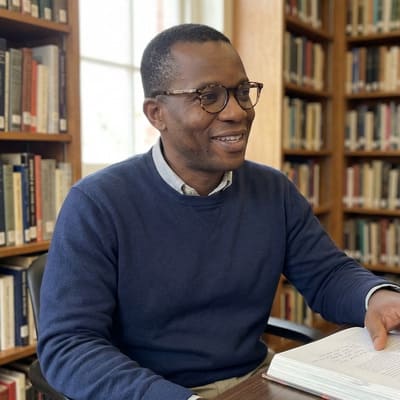 David Okonkwo
 David Okonkwo holds a PhD in Computer Science and has been reviewing tech products and research tools for over 8 years. He's the person his entire department calls when their software breaks, and he's surprisingly okay with that.
These classic books are still in print These books are no longer in print These classic books are still in print No — copying out-of-print books without permission is illegal Out-of-print simply means a book isn’t being published right now. That doesn’t mean it’s out of copyright. The copyright holder still owns all rights, whether the book is in print or not. Copying without permission breaks US law. Cambridge University Press is extremely prestigious Cambridge University Press holds an enviable spot among university presses. They’ve published works by 60 Nobel Prize winners, maintain world-class lists across humanities, social science, and STM, and boast global sales reach plus a new online academic content platform. Peter Lang essentially functions as an academic vanity press. Quality control takes a back seat to extracting the largest possible subsidies from authors.
Is copying out-of-print books without permission legal?
Is Cambridge University Press prestigious?
David Okonkwo holds a PhD in Computer Science and has been reviewing tech products and research tools for over 8 years. He's the person his entire department calls when their software breaks, and he's surprisingly okay with that.